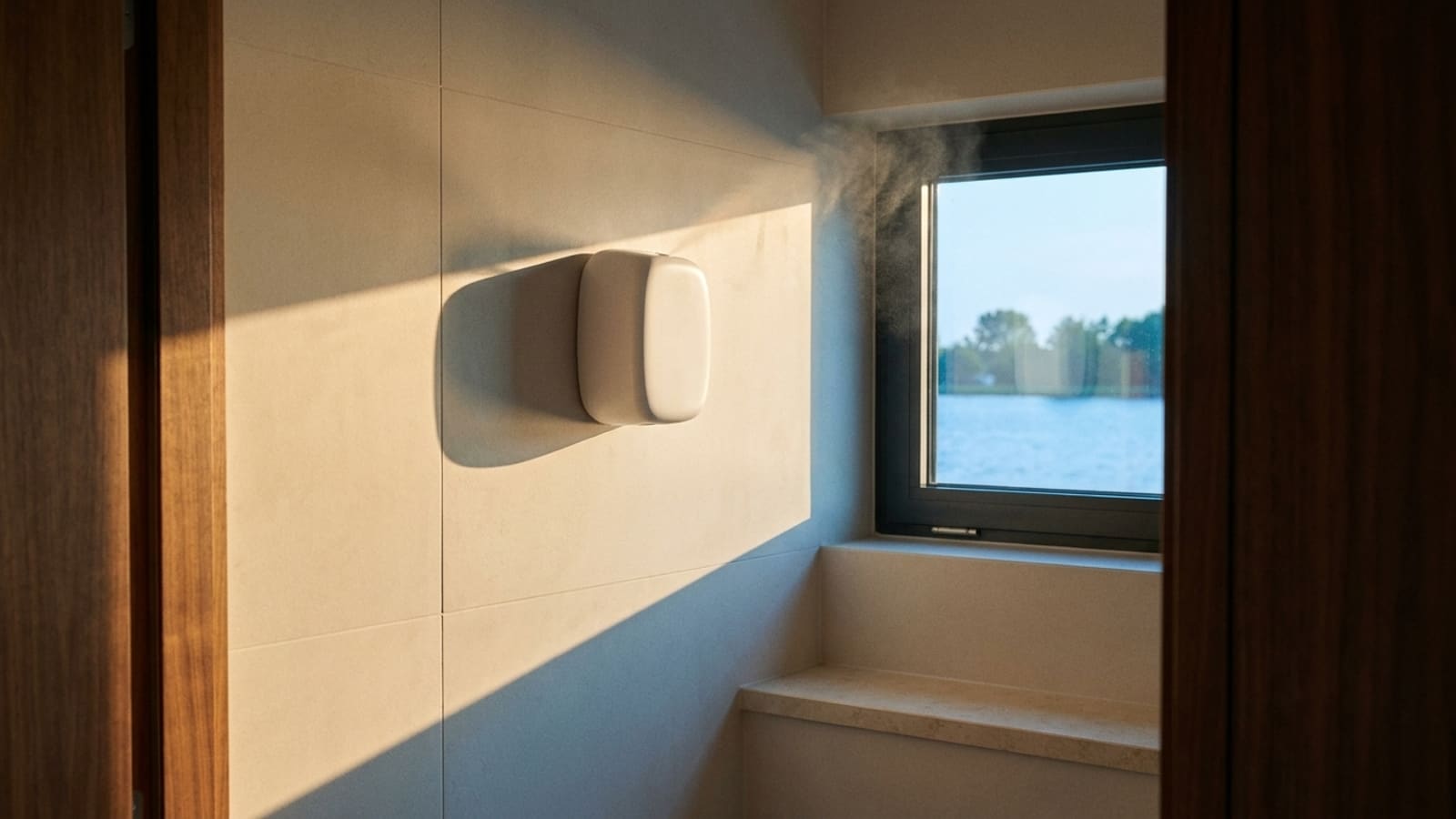
What an electric diffuser is, and how the four kinds run
An electric diffuser is a device that uses electricity, from the mains, a USB lead or a battery, to spread scented oil into the air of a room. There are four kinds, and they differ in whether the work is done by water, a pump, gentle heat or a fan.
By the editors of Aromatherapy Diffuser GuideUpdated 3 October 20265 min read
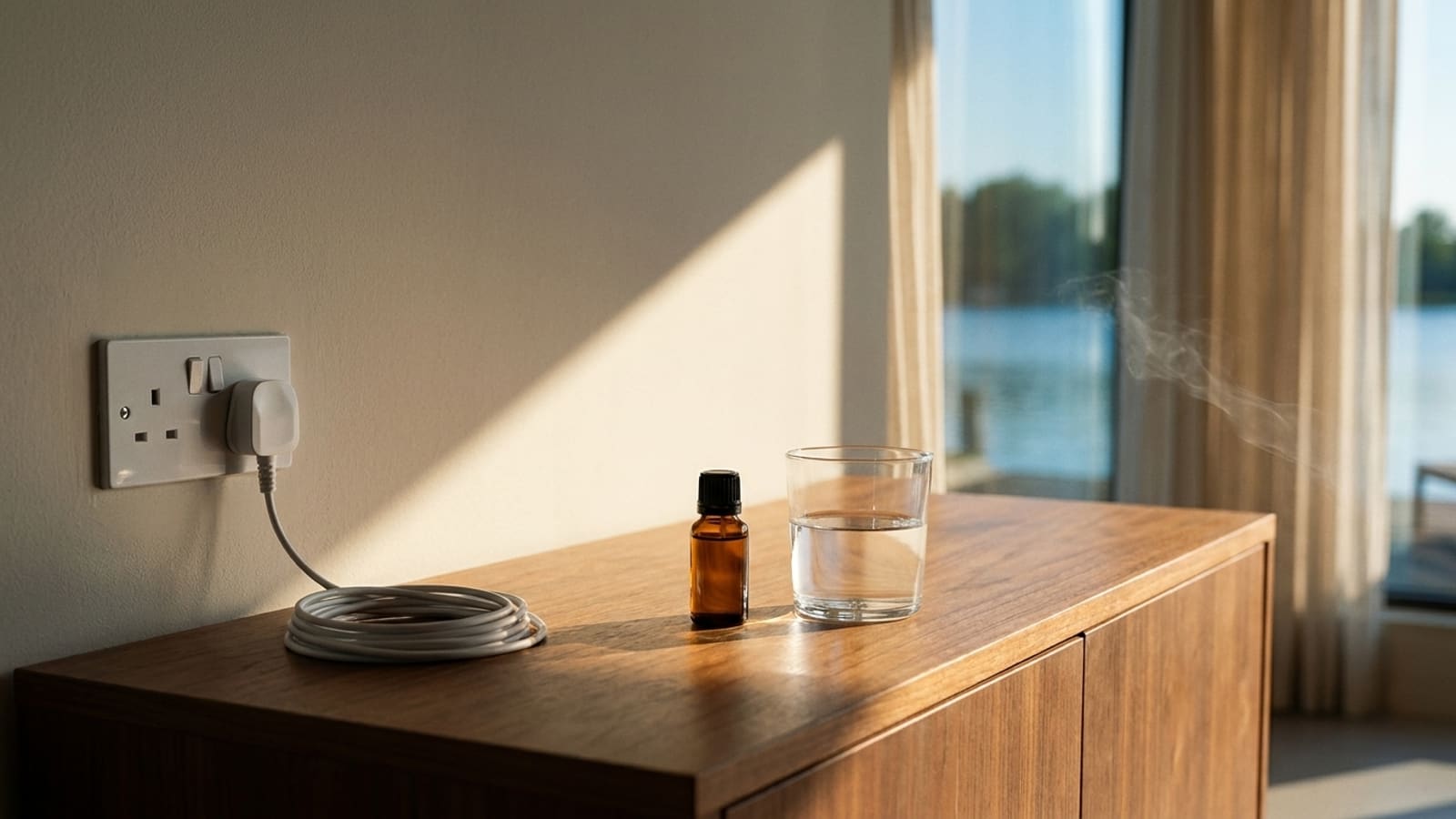
In short
- An electric diffuser uses power instead of a flame or a wick: it vibrates water, pumps neat oil, warms the oil or blows air across it.
- Water models need emptying and wiping dry; waterless ones need a clear nozzle or a fresh pad, and the leaflet sets the routine.
- Choose by socket, sound and room: mains for a living room, cordless where no lead reaches, the quietest kind beside a bed.
What makes a diffuser electric
The word sets it apart from the passive ways of scenting a room. Reeds wick, a candle burns, a burner sits over a tealight. An electric diffuser has a vibrating disc, a pump, a heating element or a fan doing the work, which is why it can be switched on and off, turned up or down and, on many models, put on a timer.
The four kinds, and how each one works
| Kind | How it works | What goes in | Usual power |
|---|---|---|---|
| Ultrasonic | A small disc vibrates under water and throws up a cool mist | Water with a few drops of oil | Mains adaptor or USB |
| Nebulising or cold-air | An air pump draws oil through a fine nozzle | Oil only, or the maker's cartridge | Mains, sometimes rechargeable |
| Heat | A low warming plate evaporates oil from a dish or pad | A few drops of oil | Mains or USB |
| Fan | A fan blows air across a pad or wick holding the oil | Oil on a pad | Batteries or USB |
Ultrasonic is the kind most people picture, the one with the visible plume. Because it runs on water, it adds a little moisture to the room along with the scent.
A nebulising or cold-air machine uses no water and no heat, so the scent leaves as a fine dry mist that is hard to see. Heat and fan models are the simplest of the four and usually the smallest, made for a desk or a bedside rather than a whole floor.
Mains, USB or battery
How a diffuser is powered decides where it can live. A mains model wants a socket within reach of its lead, which in an older British house can mean the skirting board behind the sofa rather than the shelf you had in mind. A USB model runs from a phone charger plug or a laptop port, which suits a desk.
Battery and rechargeable models go where no lead reaches: a landing, a windowsill, the middle of a dining table. Most British bathrooms have no ordinary socket, so a cordless model is the only electric option there. The price is charging it or changing the batteries.
With the socket settled, our buyer's guide to plug-in scent machines helps with the rest of the choice.
Upkeep, kind by kind
- Ultrasonic: tip out leftover water after use and wipe the tank dry. Standing water turns musty, and in a hard-water area limescale settles on the disc.
- Nebulising or cold-air: nothing to empty, but the nozzle can clog if a thick oil is left sitting in it. Follow the cleaning routine in the leaflet.
- Heat: wipe the dish or swap the pad once the oil has gone, or the next scent arrives mixed with the last.
- Fan: change or wash the pad as the maker says, and keep the air vents free of dust.
Whatever the kind, unplug it before cleaning, and keep the base away from the running tap.
What it is like to live with
Each kind makes its own sound. An ultrasonic model gives a faint burble, a nebuliser hums with its pump, a fan whirrs, and a heat model is close to silent. On a bedside table it can be the thing you notice at midnight.
Oil use differs as well. A water model stretches a few drops across a whole tank, while a machine running neat oil gets through it faster and gives a stronger scent in return, which is why many of them work in intervals rather than non-stop. A timer or an automatic shut-off is worth having on any kind, and our comparison of noise levels and monthly refill costs puts figures to both.
Where an electric diffuser fits in the house
- Living room or open-plan space: a mains model with a stated coverage figure.
- Bedroom: the quietest kind you can find, with a timer and a light that switches off.
- Hallway or landing: a cordless model, or one that reaches the socket by the front door.
- Desk: a small USB heat or fan model.
A wet mist can mark polished wood and does electronics no favours, so give a water model a mat and some clearance. Room size matters more than anything else on this list, and the guide that lists the square metres each diffuser covers is the place to check a machine against your floor plan.
Know which kind you want?
Our guide compares electric oil diffusers for British homes on coverage, noise, refill cost and app control.