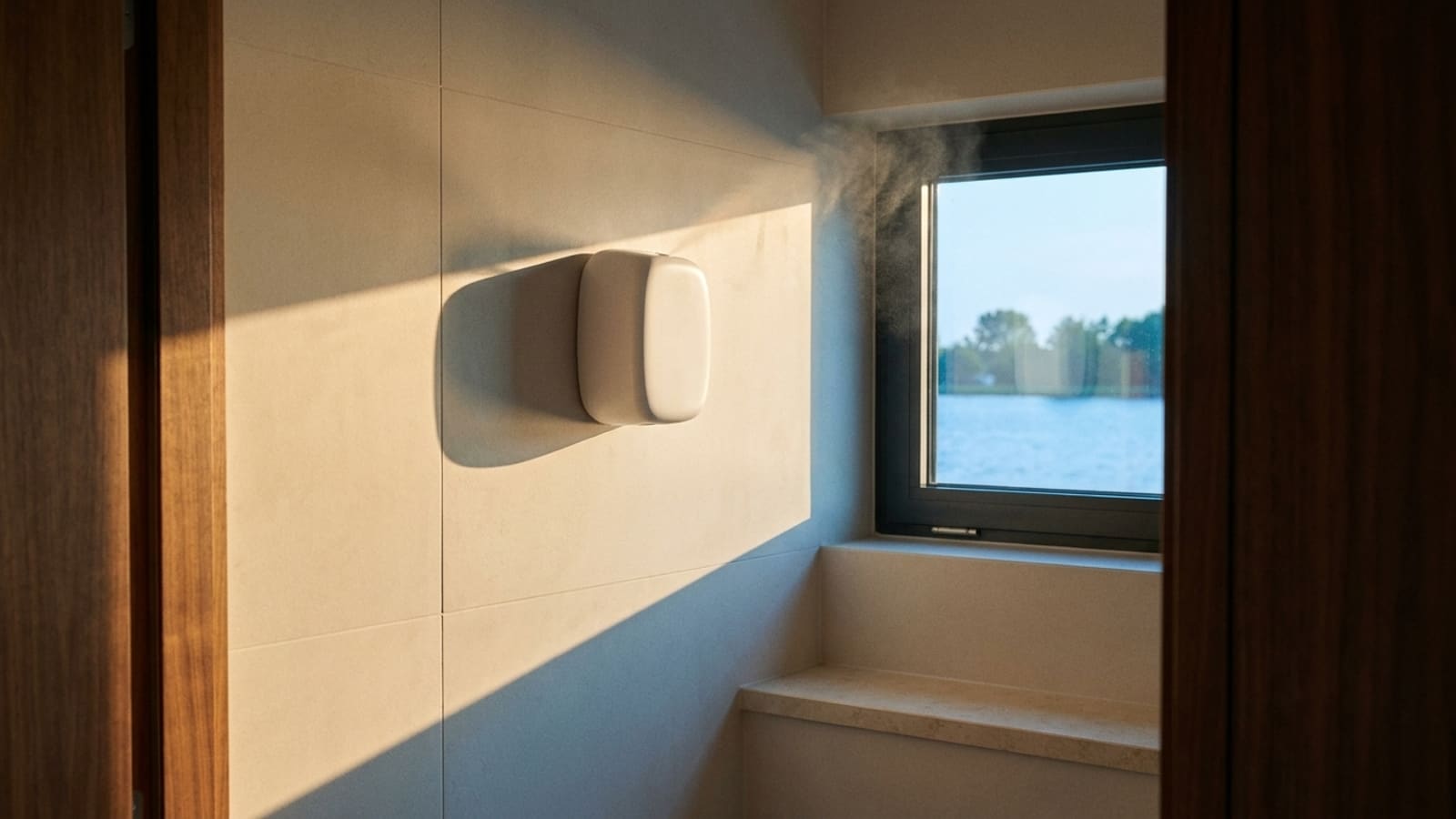
Plug in air freshener, from the heated wick to the wall socket
A plug in air freshener is a small heater that sits in a wall socket and warms the wick of a bottle of scented liquid, so the fragrance evaporates into the room for as long as it is switched on. How long a refill lasts comes down to the setting, the hours and the room.
By the editors of Aromatherapy Diffuser GuideUpdated 5 October 20265 min read
In short
- The unit is a low heater; the refill is a bottle with a wick, and the warmth lifts the fragrance off the wick's tip.
- The days on the pack are usually counted on the lowest setting, so a high dial and round-the-clock use empty it sooner.
- Plug it upright into a wall socket with clear air above, never covered, and remember it masks a smell without removing it.
What is in the plug and in the bottle
There are two parts. The unit that goes into the socket holds a small heating element and very little else. The refill is a bottle of fragrance in a carrier liquid, with a wick fixed through its neck. Clip or screw the bottle in, and the top of the wick ends up beside the heater.
The liquid climbs the wick by itself, and the warmth lifts it off the tip faster than room air would. There is no fan, no mist and no sound. Most units have a dial or slider for strength.
How long a refill lasts, and what decides it
The pack gives a figure in days, and the small print beside it matters. That figure is usually counted on the lowest setting, and sometimes for a set number of hours a day. Turn the dial up and the same bottle is empty sooner.
| What changes | What it does to the refill |
|---|---|
| The setting on the dial | A higher setting gives more scent and uses the liquid faster |
| The hours it is on | Left on day and night it uses more than a unit switched off at bedtime |
| A draught or an open door | The scent is carried off, and the temptation is to turn the dial up |
Most British sockets have their own switch, and that is the cheapest control you have. Off at night and off when the house is empty, and the bottle goes further. Should the cost of refills be the real question, the running-cost figures in our diffuser guide give something to set it against.
Where to put one, and where not
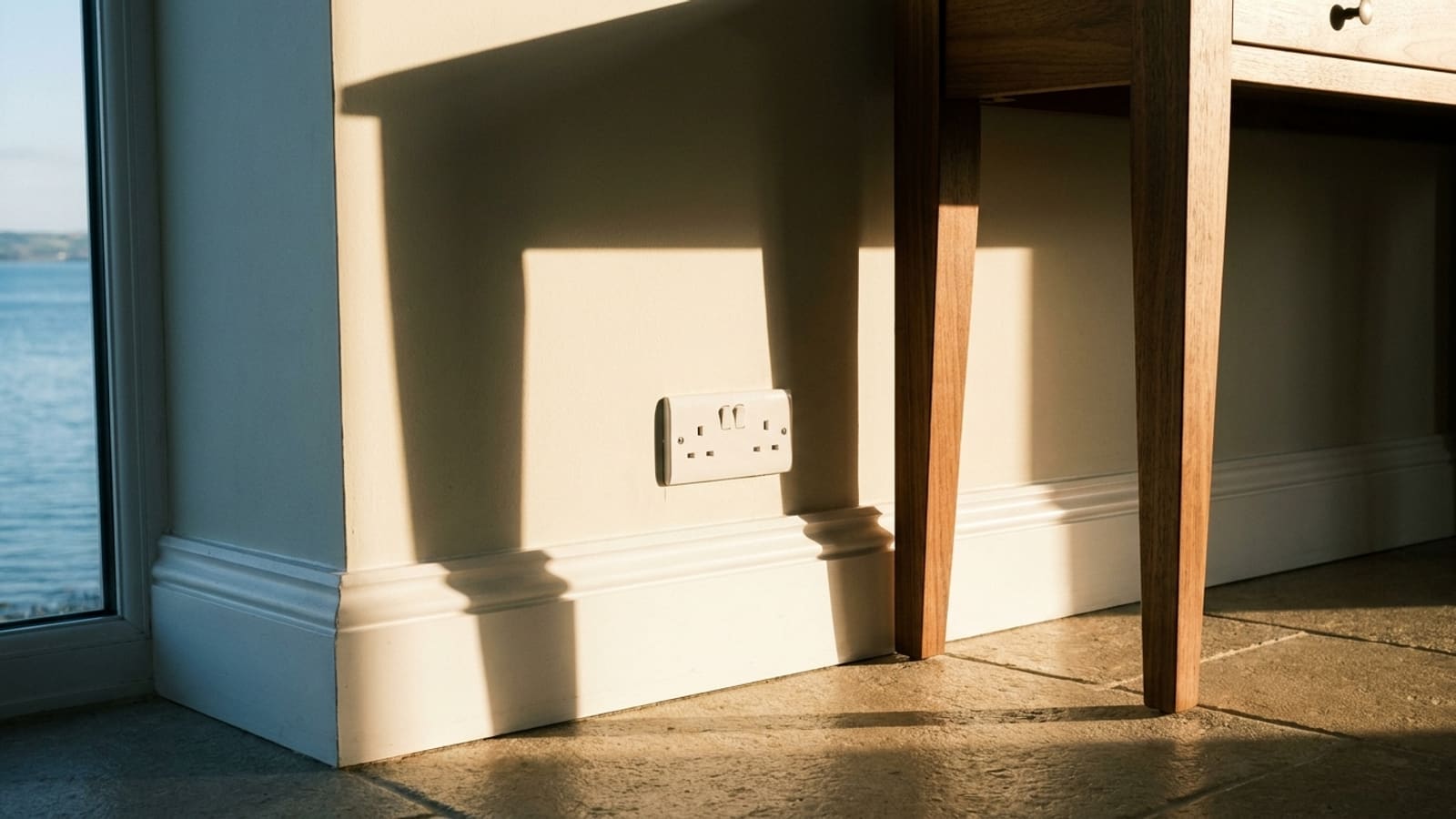
- Pick a socket with clear air above it. The warm, scented air rises, and a shelf or curtain directly above catches it.
- Keep it upright. The bottle holds liquid, and in a socket mounted sideways it can leak unless the unit has a plug that turns.
- Not behind a sofa, a bed or a full-length curtain. The scent stays trapped there, and the unit should never be pressed against fabric.
- One plug, one modest room. In a hall or a small sitting room it carries; across an open-plan ground floor it fades a few steps from the socket.
For the big rooms, a machine with a stated reach is the fairer match, and our overview of electric diffusers for open-plan rooms starts from the floor area.
Safe use at the socket
- Plug it straight into a wall socket. Many leaflets rule out extension leads and multi-way adaptors, so read yours.
- Never cover it.
- Switch off at the wall and let it cool before you change the refill. The unit runs warm.
- Handle it with dry hands, and wipe up spilt liquid at once. It can mark paint and varnish, and should be washed off skin.
- Use only the refill made for that unit, and never top a bottle up with anything else.
- Unplug it and replace it if the casing is cracked, discoloured or smells of hot plastic.
What it does about a smell, and what it does not
A plug-in adds fragrance to the air. It does not take anything out of it. The smell of last night's fish, a damp towel or a full bin is still there underneath, and once the bottle is empty it is back.
So deal with the source first: empty the bin, open a window, and look for the cause of any musty smell, since a scent does nothing about damp. After that a plug-in is a pleasant background.
A plug-in beside the other ways of scenting a room
| Method | How the scent leaves | Your control | Suits |
|---|---|---|---|
| Plug-in refill | A warmed wick | A dial and the wall switch | A hall or small room with a free socket |
| Aerosol or pump spray | A burst when you press | Only when you spray | A quick cover after cooking |
| Reed diffuser | Unheated reeds | The number of reeds | A shelf with no socket nearby |
| Electric oil diffuser | A mist or cold air from a machine | Settings, often with a timer | Larger rooms and a wider choice of scent |
The plug-in wins on simplicity, with nothing to fill or rinse. Its limits are the other side of that: you choose from the scents sold for that unit, and a basic model has no timer. If those limits bother you, our comparison of diffusers with scheduling and adjustable strength is the next thing to read.
Outgrown the plug by the skirting board?
Our guide compares electric oil diffusers for British homes on the area they cover, how loud they are and what a refill costs.