Room spray, a burst of scent for the moments a room needs one
A room spray is fragrance in a bottle that you spray into the air for a quick lift that fades soon after. It masks a smell rather than removing it, so it suits the loo, the hall and the kitchen after cooking, and not a room you want scented all day.
By the editors of Aromatherapy Diffuser GuideUpdated 12 October 20265 min read
In short
- In the bottle: fragrance or essential oils in alcohol, or in water with a solubiliser; an aerosol adds a propellant, a pump spray does not.
- The droplets are fine and the scent leans on the notes that lift off first, so it is strong for a moment and gone soon after.
- Spray into the air, never at fabric or polished wood, and keep it for quick jobs; for scent that lasts the evening an electric diffuser is the better tool.
What is actually in a room spray
Most room sprays are three things: a scent, which is a fragrance oil, a blend of essential oils, or both; a solvent that carries it and lets it leave the nozzle as a fine mist, usually alcohol, or water with a solubiliser that stops the oil floating on top; and a way of getting it out of the bottle.
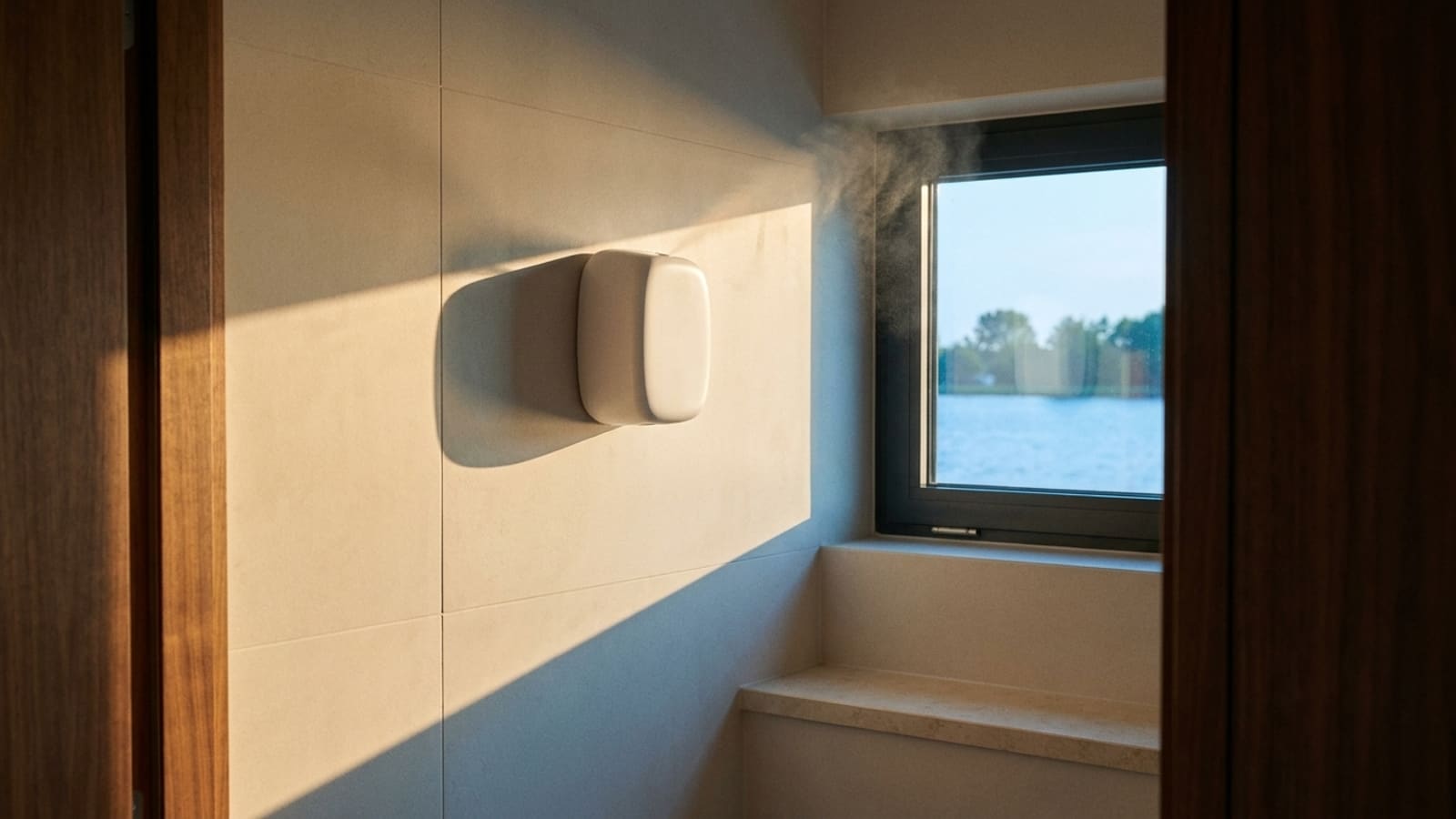
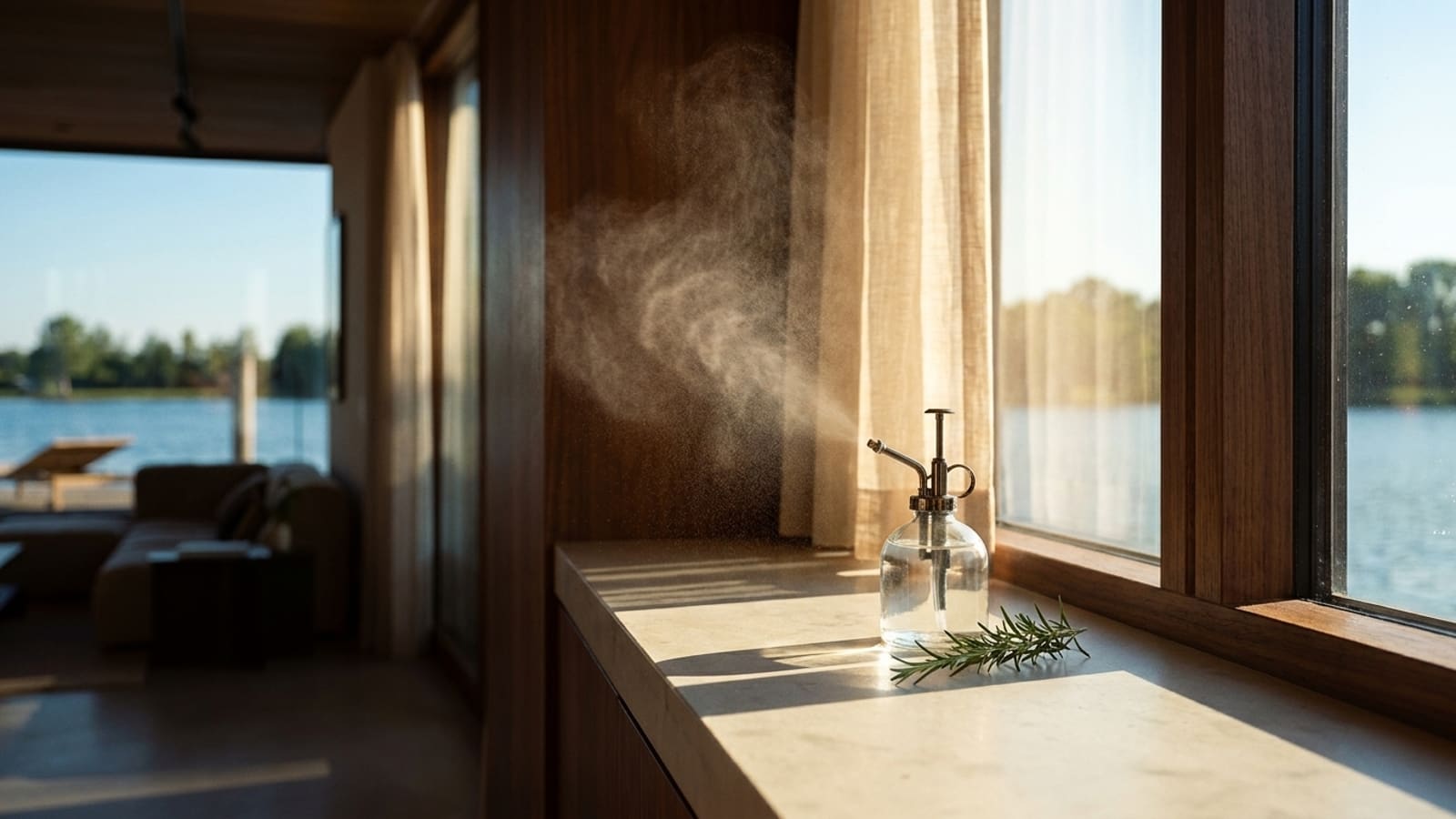
That last part splits the shelf in two. An aerosol holds a propellant under pressure and gives a very fine cloud at a touch. A pump spray relies on your finger, gives larger droplets, has no propellant and can be refilled.
Why the scent is gone so quickly
A room spray is built to vanish. The droplets are tiny and evaporate almost at once rather than settling on surfaces. The scent leans on top notes, the citrus, herb and mint that lift off fastest, because those are what you smell first. Before long they have flown.
A spray also covers a smell; it does not take it out of the air. The bin, the damp towel and the fried fish are still there underneath, and once the fragrance has faded, so has the cover.
Where a spray earns its place
- The loo. A burst after use, with nothing to switch on or watch.
- After cooking. Once the extractor has run and the window has had a spell open, a spray covers the last of the onion in the hall.
- Guests at the door, or a quick lift in the hall before you go out.
Where it falls short is anything lasting. A smell with a cause, such as damp, drains or a full bin, comes straight back, and spraying over it only delays finding the cause. A sitting room you want to smell of something all evening needs a source that keeps going; our comparison of electric diffusers for scent that lasts the whole evening is the page for that.
How to use one well
- Spray into the air at about head height, in the middle of the room, and let the mist fall.
- Not onto fabric or polished wood. Alcohol and fragrance oils can mark varnish and spot upholstery.
- Away from your face and never towards anyone else. Let it settle before you breathe it in.
- Open a window first for cooking smells. Fresh air removes; the spray only covers what is left.
- One or two presses is enough. More does not last longer, it only makes the first moment heavier.
- Keep alcohol-based sprays away from the hob, candles and the fire. The mist is flammable until it has evaporated.
A simple pump spray you can make at home
A home-made room spray is water, a little alcohol or a solubiliser, and a few drops of essential oil in a clean pump bottle. The alcohol or solubiliser matters: oil and water do not mix, and without it the oil sits on the surface and comes out in blobs. Shake before each use regardless.
Make a small batch, label it with what is in it and the date, and keep it out of the sun. A home mix has no preservative, so bin it if it clouds or smells off. If you would rather have the scent run on its own, the diffusers we compare on reach, hum and refill cost take the same bottle of oil and meter it out.
Spray, reeds, candle, plug-in or an electric diffuser
| Source | Lasts | You control | Best for |
|---|---|---|---|
| Room spray | Moments | Each press | The loo, the hall, after cooking |
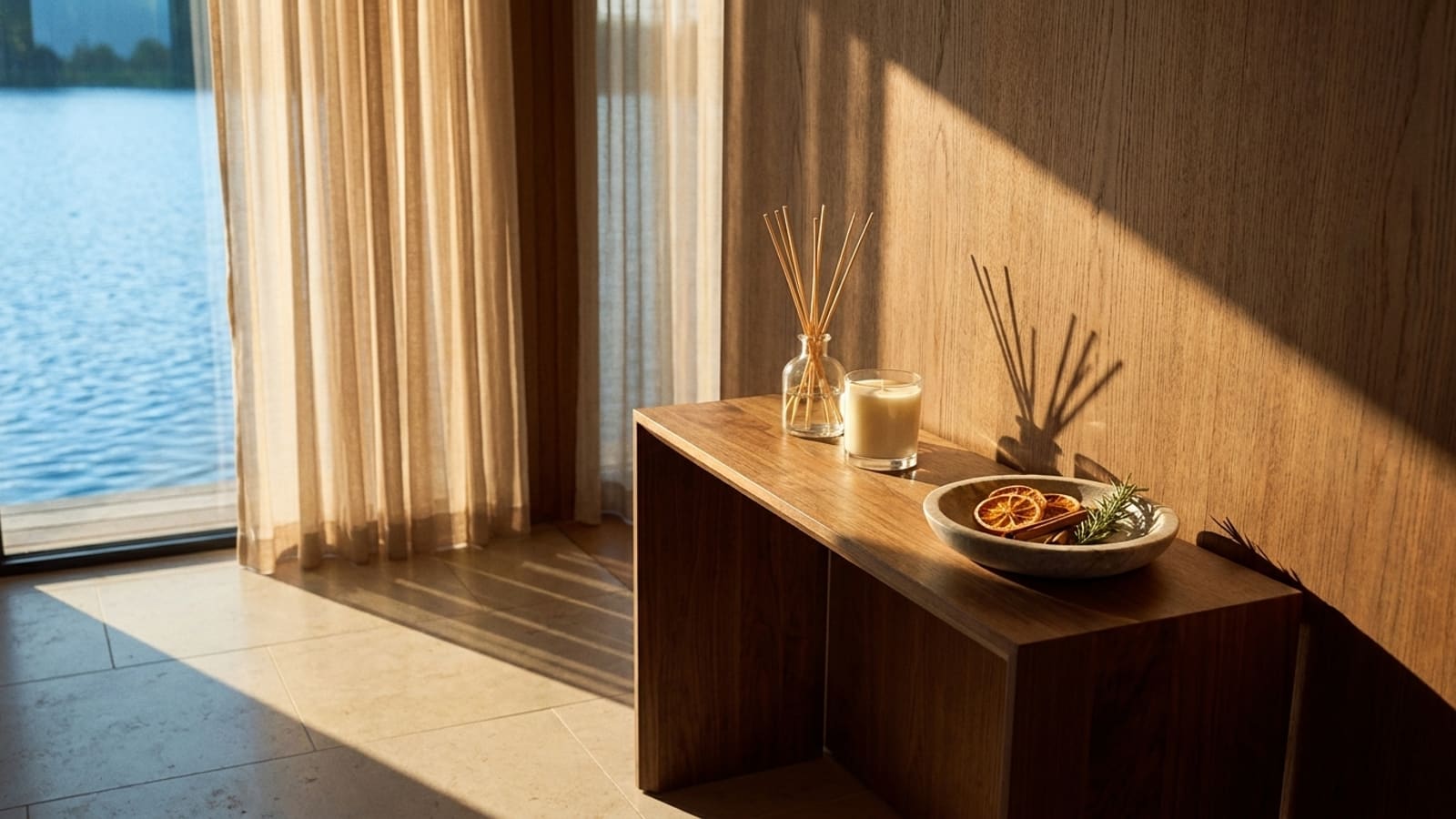
| Reed sticks | Continuously, faintly | The number of reeds | A small room with no socket |
| Scented candle | While it burns | Lighting and snuffing | An evening you are in the room |
| Plug-in | While it is switched on | A dial and the wall switch | A hall with a free socket |
| Electric diffuser | When you choose, at a set strength | Settings, often a timer | A larger room, scent on your terms |
The quick jobs stay with the spray; the long ones go to a source that keeps going on its own. If that one is still to be chosen, our guide to electric diffusers that run on a timer in a British home is the next page to read.
Want the scent to stay longer than a spray?
Our guide compares electric oil diffusers for a British home on coverage, noise and refill cost per month.