The scented candle, what is in the jar and how to get the scent out of it
A scented candle is wax with a fragrance stirred through it and a wick down the middle. The flame melts the wax into a warm pool, and that pool, not the flame, sends the scent into the room. How much you get depends on the wax, the first burn, the wick and the size of the room.
By the editors of Aromatherapy Diffuser GuideUpdated 9 October 20265 min read
In short
- Wax, fragrance and wick decide how a candle smells; the label names the wax, rarely how much fragrance is in it.
- Let the first burn melt the wax right to the edge of the jar, keep the wick short, and match the candle to the room.
- A flame needs watching. For a long evening, a bedroom or a cat that walks the shelves, an electric diffuser does the job without one.
Three parts, and what each one does
Any candle is three things. The wax is the fuel and the body. The fragrance is a fragrance oil, an essential oil or a blend of the two, mixed in while the wax was liquid. The wick carries melted wax up to the flame and, by its thickness, sets how wide the melt pool gets.
| Part | On the label | What it changes |
|---|---|---|
| Wax | Paraffin, soy, rapeseed, beeswax, coconut blend | How it burns and how the top sets |
| Fragrance | Fragrance oil, essential oil, or both | The scent itself |
| Wick | Cotton or flat wood | Flame size, width of the pool |
Labels name the wax and seldom say how much fragrance went in. Paraffin is refined from crude oil and is the usual choice; soy, rapeseed and coconut are plant waxes with a softer, matte look; beeswax carries a honey note of its own.
Cold throw, hot throw, and the candle that fades at home
Candle makers talk about two throws. Cold throw is what you smell from the unlit candle with the lid off. Hot throw is what it gives off once the melt pool has formed. In the shop you also smell dozens of open jars in a warm room, not the one you take home.
Back at yours it sits alone in a larger, cooler room, and a nose soon stops noticing a steady scent. A candle made for a bedside table has little chance in an open-plan kitchen and sitting room.
The first burn sets the rest
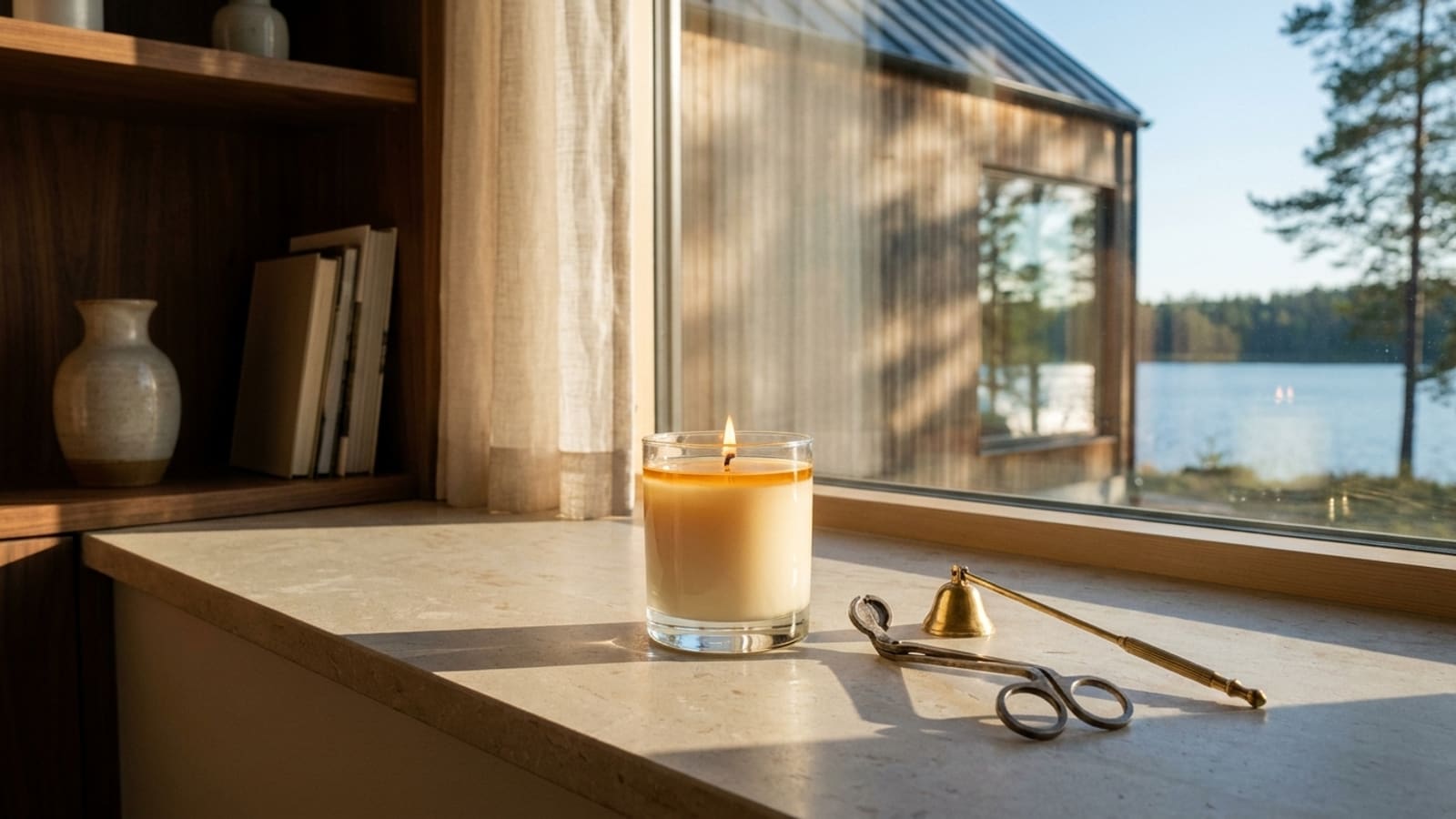
Wax has a memory of sorts. On the first burn, let the melt pool reach the edge of the jar before you put the candle out. Stop early and the next burn tends to halt at the same ring, so the candle tunnels down the middle.
- Give the first burn time. Light it when you can sit with it until the pool touches the glass all the way round.
- Keep the wick short and trim it before each burn; a long wick gives a tall, smoky flame and a black rim on the glass.
Where to put it in the room
A candle scents the air it warms, so place it where that warm air can spread. A low table in the middle of the sitting area does better than a shelf by the window. Keep it out of the draught from a door or hallway, away from the hob and clear of anything hanging above it.
If the room you are trying to scent is the whole ground floor, no single candle will fill it. For a space that size it is worth reading the room-size column in our diffuser comparison before buying a third candle.
Keeping a flame safe in the house
A cat that walks the shelves will walk past the candle, and many cats are sensitive to concentrated essential oils, so a vet is the one to ask. If a naked flame leaves you uneasy, our comparison of oil diffusers that switch themselves off covers scent with nothing to extinguish.
The last of the wax, and what to do with the jar
That last layer leaves a puck of wax and a metal wick tab in the jar. Two household methods get the wax out, and a spoon does the rest.
- Freezer. Leave the jar in the freezer until the wax is hard right through; it shrinks as it chills and usually lifts out in one piece.
- Hot water. Pour hot, not boiling, water into the jar. The wax melts, floats and sets on top as a disc you lift off; keep it out of the drain.
- The tab. Prise the metal wick holder off with a spoon; washing-up liquid shifts the glue.
When a flame is the wrong tool
A scented candle is for an evening when you are in the room to enjoy it. It does not suit a long evening when you may doze on the sofa, a bedroom where you want scent as you drift off, a hallway you only walk through, or a house with a cat that goes where it likes.
For those, an electric diffuser does the same job without the flame. It can be turned up or down, and many switch themselves off after a set time. On the other nights, our plain guide to choosing a flame-free diffuser sets out which one suits which room.
Want the scent without the flame?
Electric oil diffusers for a British home, compared on coverage, quiet running and refill cost.